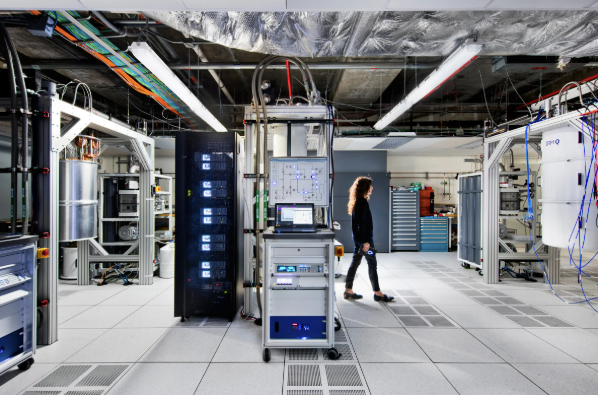
Quantum technology represents a transformative force in contemporary research. Its capacity to address complex problems through quantum computing enhances problem-solving efficiency. Meanwhile, quantum sensors introduce unparalleled accuracy in measurements, revealing insights into fundamental physical phenomena. Additionally, the exploration of quantum materials could redefine information processing capabilities. These advancements suggest a paradigm shift across various fields, prompting an investigation into their broader implications for future innovations. What lies ahead in this evolving landscape?
How Quantum Computers Could Transform Problem-Solving
As researchers delve deeper into the capabilities of quantum computers, it becomes increasingly evident that these machines possess the potential to revolutionize problem-solving across various fields.
Quantum algorithms significantly enhance computational speed, enabling complex problems, previously insurmountable, to be solved efficiently. This newfound capacity empowers innovations in cryptography, optimization, and materials science, fostering an environment where creative solutions can flourish, unbounded by classical limitations.
The Role of Quantum Sensors in Precision Measurement
Quantum sensors represent a significant advancement in precision measurement, leveraging the unique properties of quantum mechanics to achieve unprecedented levels of sensitivity and accuracy.
These devices utilize quantum entanglement applications to enhance measurement capabilities, particularly in nanoscale measurement techniques.
As a result, they enable researchers to explore fundamental physical phenomena and unlock new frontiers in science, fostering a deeper understanding of the universe.
Exploring Quantum Materials for Advanced Research
While the exploration of quantum materials has gained momentum in recent years, it is crucial to recognize their transformative potential in advanced research.
Quantum entanglement applications, combined with insights from topological insulators research, promise to revolutionize electronic devices and information processing.
These materials not only enhance performance but also enable novel pathways for innovation, fostering a landscape ripe for scientific and technological freedom.
See also: The Most Influential Tech Companies in the World
Future Implications of Quantum Technology in Various Fields
The future implications of quantum technology are poised to extend far beyond the realm of computing, impacting diverse fields such as medicine, telecommunications, and materials science.
Innovations in quantum communication promise unparalleled data transmission security, while quantum cryptography could revolutionize privacy protocols.
These advancements may empower individuals with unprecedented control over their information, fostering an era of enhanced security and freedom in digital interactions.
Conclusion
In juxtaposing the vast potential of quantum computing with the intricate precision of quantum sensors, it becomes evident that quantum technology is poised to redefine research paradigms. While quantum computers promise to unravel complex problems, quantum sensors offer the meticulous measurement required to validate these solutions. Together, they illuminate a path toward revolutionary advancements in quantum materials, ultimately transforming diverse fields and reshaping societal frameworks. As researchers harness these tools, the future of innovation stands on the precipice of unprecedented possibilities.